Clothes dryers are one of the leading causes of residential fires every year in the U.S. Almost half of these fires were caused by "operational deficiency", meaning a dryer and venting system that was not properly maintained. The most common causes of this are improper venting materials such as too much flexible venting being used, crushed venting behind the dryer, lint buildup in the venting system and outdoor wall caps with bird screens (which are not allowed by code) that collect lint and reduce airflow. The reduced airflow prevents the dyer from properly exhausting the steam created by the dying process. If your dryer takes longer than it should to dry, the most likely cause is improper or clogged venting, which is unsafe and costing you up to twice as much to dry your clothes.
Today, the only place flexible venting is permitted is to connect from your dryer to the venting system and may only be a maximum of 8 ft. in length. All other venting should be rigid aluminum vent pipe with a smooth interior. Heavier galvanized pipe and PVC pipe are not allowed as they will not warm up like the aluminum and therefore cause condensation of the steam from the dryer which causes rapid lint build‑up.
Learn more about the different types of dryer venting materials:
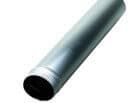
Rigid Aluminum Vent Pipe and Elbows
This is the best venting choice for your dryer. It has a smooth interior that retains fire and smoke and is not easily crushed, and the full four-inch diameter pipe does not promote lint accumulation. This is the only venting approved for use inside walls or other enclosed spaces.
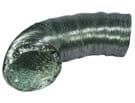
Heavy-Duty Aluminum Transition Venting
This type of venting is to be used between the dryer and connections through walls. New style flexible aluminum venting meets UL 2158A transition venting specifications. Maximum length is eight feet, and this type of venting is not to be used inside walls or other enclosed spaces.
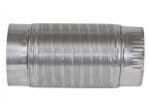
Semi-Rigid Aluminum Venting
This is to be used between the dryer and connections through walls. It has a smooth interior and maintains a four-inch diameter, and the maximum length is eight feet. This style of venting can be difficult to work with since it is easily crushed and does not return to shape. If it gets crushed, it needs to be replaced.

Aluminum Flexible Venting
This lightweight aluminum foil venting does not meet new venting requirements and should be replaced.

Plastic Flexible Venting
This venting has no fire protection properties and should never be used to vent a dryer.